
AI is phenomenal at removing the friction of labor. It can draft emails, organize spreadsheets, and generate clean syntax in seconds. It has made "work" efficient. But there’s a dangerous trap here: we are starting to confuse a polished, automated output with a profound idea.
Often, that core idea gets completely lost in the quest to achieve a fast, optimized finish. Without the collaborative friction of human creative teams—the Copywriters, Designers, Art Directors, Creative Directors, DPs, and Editors—the soul of the work evaporates. And to what end? Because it can be done faster and cheaper?
That transactional speed comes at the direct expense of the original concept, refusing to allow an idea the breathing room to evolve and morph into something incredible. Truly great work only happens because multiple creative brains touched it, tweaked it, and left their unique mark on it along the way. AI gives us the destination without the journey. But in creative advertising, the journey is the destination.
The Sea of "Good Enough" vs. Break the Mold Creative Gold
AI is linear, safe, and predictable. True creativity is absolutely not. It is chaotic, random, and built on a mountain of discarded drafts rather than a perfect first prompt. Right now, the marketplace is drowning in a sea of "good enough" content. It has become incredibly easy to produce sheer volume; you can launch a brand identity package, a social media calendar, and a campaign strategy over a single lunch break.
But when everything is perfectly optimized based purely on historical data, everything starts to look and sound exactly the same. AI can only look backwards; it predicts what will work based entirely on what has already worked. Yet truly great marketing, advertising, and design have always been about doing what has never been done before.
Take our long-standing partnership with Sector SPDR ETFs. When managing creative for the world’s largest sector ETFs, the institutional temptation to play it safe, predictable, and heavily data-optimized is massive. The financial sector is notorious for backward-looking compliance copy that blends directly into the background noise. An AI looking at historical financial ads would simply spit out another literal, dry asset layout. But standing out to sophisticated investors requires a human touch willing to break the generic mold.
Inside the "Human Mess": The Sector SPDR Evolution
The human creative process is inherently inefficient and messy. It requires a willingness to trudge through the mud to find the breakthrough.
- The False Starts: Writing fifty terrible headlines that make absolutely no sense, just to clear the pipes and bypass the obvious.
- The Creative Friction: Engaging in passionate arguments in a conference room over a single word in a headline, a subtle tweak to a layout, or a choice color in an illustration.
- The Existential Doubt: Facing the terrifying moment forty-eight hours before a pitch or production launch, where the team realizes the current concept isn't truthful enough, deletes it all, and starts over from scratch.
This exact human friction is what shaped our creative approach for Sector SPDR:
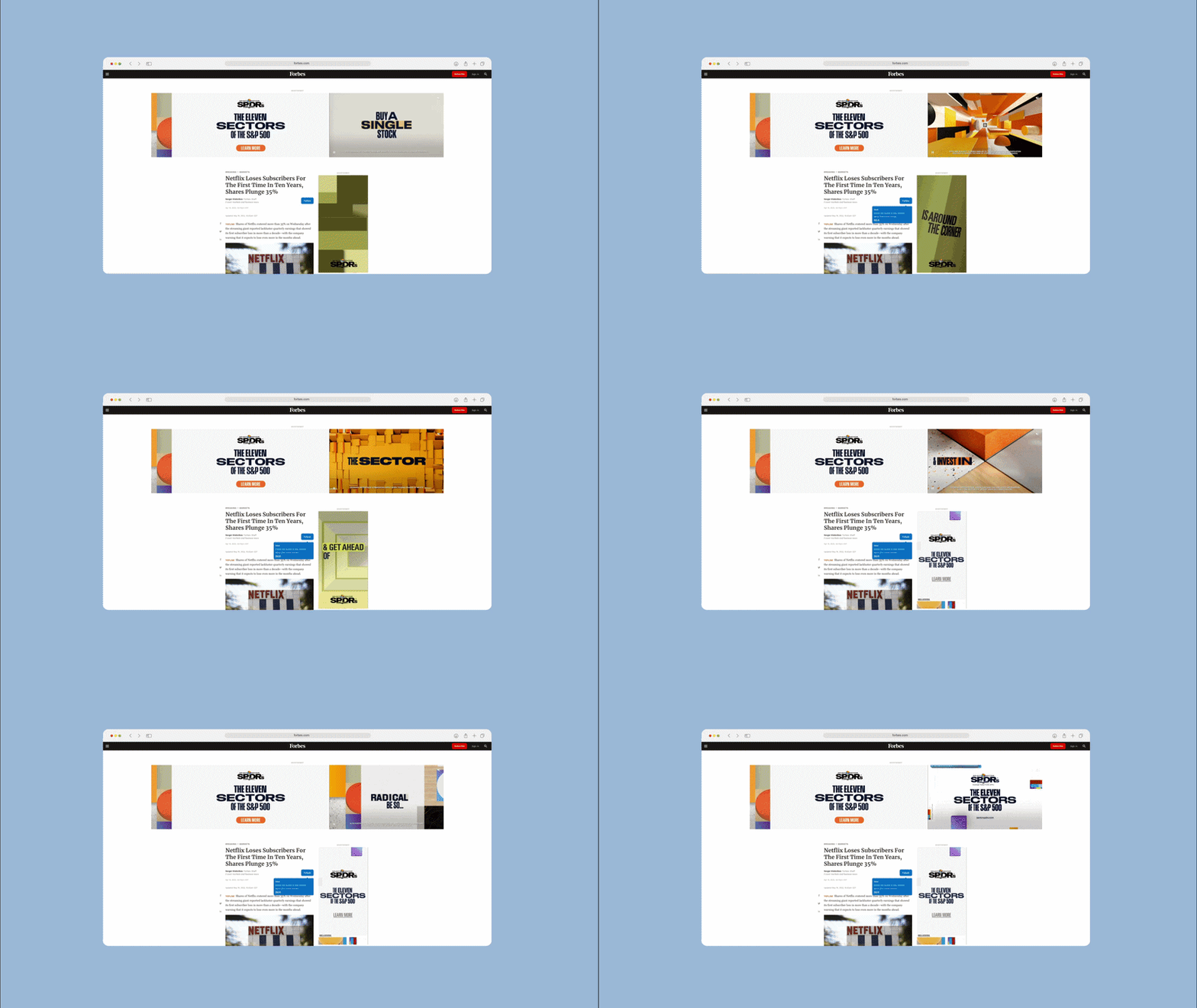
Sector SPDRs – Content Alignment Campaign Our creative journey meant intentionally stepping away from the literal, dry depictions used in legacy financial advertising. We spent hours in the mess—debating strong typography, fine-tuning compelling animations, and strictly utilizing the bold colors of the brand to weave a premium narrative. We resisted the "safe" route to build a campaign centered on contextual alignment, positioning Sector SPDR alongside high-level investing strategy articles to cement them as an industry leader.
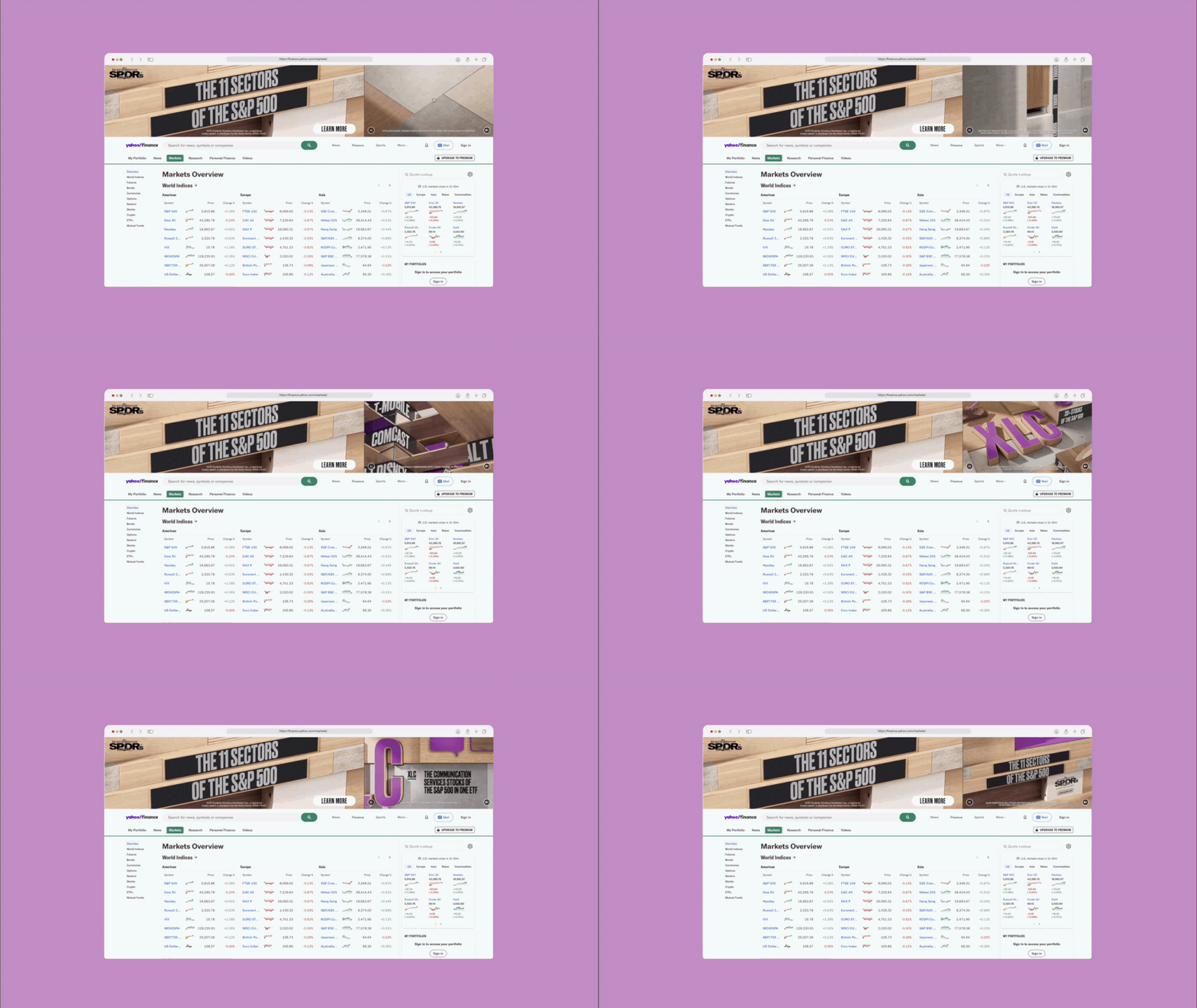
Sector SPDRs – Sector Holdings Campaign We were tasked with translating highly complex, abstract asset allocation strategies into sharp, action-oriented pre-roll and TV spots. We needed a fresh, bold visual language to entice investors to look at the stock market in a completely new way. That breakthrough didn't come from a flawless first prompt; it came from an editing bay full of human brains arguing over rhythm, clarity, and visual impact. The messy process paid off, yielding an ownable campaign that drove a powerful 8% performance lift.
The Taste Filter is Not a Bug
For clients, it is incredibly tempting to want to engineer that messiness out of the budget to save a dollar. But that mess is not a bug; it’s a feature. The existential doubt is the creative team's critical taste filter. The false starts are the mandatory steps required to leap past the baseline. When you buy automated, AI-generated creative work, you are simply buying a first draft that skipped the filter entirely. It feels clean on the surface, but it lacks a soul.
This isn't a rant against AI technology. AI is an incredible tool, and smart clients should absolutely expect their agencies to utilize it to streamline administrative labor. AI has made work easy. It has not made great work easy.
If you want baseline content that simply fills a digital grid and checks a corporate box, use the machine. It will save you money in the short term. But if you want profound creative ideas that target real human emotions—ideas that command a premium price, move the needle in hyper-competitive markets, and build deep, loyal institutional communities—you must pay the tax of human endeavor.
Stop running away from the creative struggle. Lean into it. Because the messiest rooms usually produce the cleanest breakthroughs.